
Bridge Marina co-owner Becca Fernandez reflects on launching a boat club with Ray Fernandez in New Jersey in 2006 – and what two decades have taught them about boating, business and the importance of hospitality and service today.
When Ray and I launched Bridge Marina Boating Club in 2006, “shared-use” experiences were not yet part of everyday life. People weren’t used to accessing a premium product without owning it outright. The idea that several families could enjoy the same fleet of boats – and that someone else would handle the cleaning, maintenance and more – was difficult for many to picture.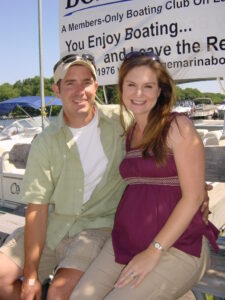
So back then, we spent much of our time explaining what a boat club even was. Today, boat clubs can be found throughout New Jersey and across the country. They are championed at marine industry conferences, featured in boating publications and offered by all kinds of marinas, dealerships and franchises. We’ve watched the “boat club” category grow from something we had to explain repeatedly into an increasingly common way to get on the water.
Two decades later, though, the reasons we started our boat club in the first place have not changed. We wanted to make boating easier, more accessible and safer… and we still do.
The Idea Started with an Old Boat… and a Boat Cover We Hated
In the early 2000’s, Ray and I were a young, newly married couple with an older boat that we used all the time. We loved being on the water. We did not love covering the boat.
Anyone who’s owned a boat knows that enjoying it is only one part of the experience – cleaning, uncovering, covering, fueling, maintaining, repairing and storing it are all required, too. Those responsibilities are manageable for many boat owners, but they take time – and they are not usually the part people dream about when they picture a day on the water.
With that annoying boat cover in mind, we thought for a moment: What if someone else took care of the cover?
Then we took it further: What if someone else handled everything, and you could simply show up, head out and then go home at the end of the day? And not be responsible for any of that annoying stuff?
That was the idea. A boat club.
At the time, nothing like it existed in New Jersey. We briefly thought we might have invented an entirely new concept. We soon learned that boat clubs were already gaining traction in dense boating communities like Florida, including through franchises like Freedom Boat Club.
The broader concept may not have been new, but we believed our approach could be. We wanted to remove what we used to call the “drudgery” of boat ownership while still preserving the parts people loved: the fun, the experiences, the time with family and the chance to learn the sport of boating.
Launching a Boat Club Before We Had Boats… or Members
 Our official launch took place at the New York Boat Show, which at the time was a massive, weeklong undertaking crowded with vendors and dealers, open 10am to 9pm most days. Every morning, we’d drive from Lake Hopatcong to Weehawken, hop on the ferry into Manhattan and make our way to the show at the Javits Center. Ray and I are both competitive by nature, so even finding ways to shorten the commute each day became part of the adventure.
We bought booth space, purchased materials from a trade show website, created printed materials and developed our initial plan.
There was only one small problem: We did not own a single club boat. We also had zero members.
We sent out a press release anyway. Back then, a headline like “Local Marina Launches Boating Club at New York Boat Show” could actually earn space in a printed local newspaper. And it surprisingly did! At least one local newspaper picked up the story and did a feature article about the new boating concept coming to Lake Hopatcong.
Our booth at the New York Boat Show was fairly makeshift. We splurged on a Velcro attached backdrop that included our newly developed logo and put up signage we printed in house. Because few people at the show knew where Lake Hopatcong even was, we included a screen running a PowerPoint presentation of pictures that served almost as a welcome center for Lake Hopatcong.
We stood in that booth every day. We talked to anyone who would listen. We explained the concept. We refined our sales pitch. We collected feedback. We met other vendors and started building relationships.
How many memberships did we sell during that entire show? Zero. Not one.
Each night, we went home and talked about what we could explain differently, what we could improve and how we might connect with people more effectively. Tomorrow would be better. We’d sign up our first member and make a sale! That sale never appeared. To say the least, it was disappointing, but it didn’t deter us.
Our First Boat Club Member Found Us in a Free Local Magazine
That winter and spring, we kept marketing. I continued sending press releases about this new way to enjoy boating. We created a website, which was still a fairly novel concept for a marina at the time. We mailed postcards, joined local chambers of commerce and attended and hosted networking events.
Our first member, Jack, came to us from an article Ray wrote in the Shopper’s Friend, a free monthly magazine people could pick up near the entrance of the local Pathmark grocery store on Route 15 in Lake Hopatcong. We still remember the upbeat phone call from Jack and his genuine interest in what we had to offer. Jack remained a boating club member with us for several years and has unfortunately passed away since – both Ray and I have talked about how we wish we could tell him him now how much that phone call meant. He was a good deal older than us, wiser for sure, and his support of what we were putting together gave us the confidence we needed to keep at it.
 With Jack’s sign up, zero members had turned to one. One member became two. Two became four. It was happening. As memberships grew, so did the fleet.
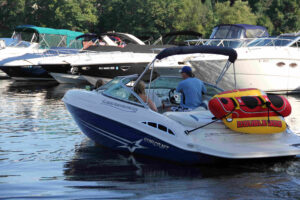
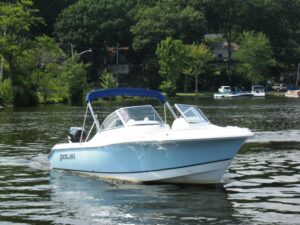
Our original fleet of boats was pulled together from whatever resources we could find: an Odyssey pontoon boat and two used bowriders already in the marina’s inventory, plus a brand new Polar center console boat that cost about $30,000. We didn’t have the cash or capital to buy that fourth boat outright, so I took a loan from my 401(k) to make it happen. There was no sophisticated investment round, no national marketing campaign or large corporate parent behind us. There was a plan, a lot of persistence and a belief that we could make this thing happen.
From Four Boats to a 40+ Boat Club Fleet
What started out as a handful of boats grew. A few years after launching the boat club, Bridge Marina signed on as a Starcraft dealer, which allowed us to begin outfitting the club with new pontoons and fiberglass boats from the same manufacturer. That shift helped us improve consistency and customer experience across the fleet.
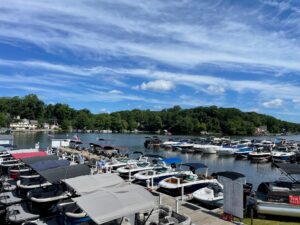 Over time, our boat club expanded beyond its first four boats. We added more models, more membership options, more training opportunities and, eventually, another boating club location in Highlands on Sandy Hook Bay in 2019. Today, our boat club members have access to a fleet of forty-plus boats and two very different boating environments.
But growth hasn’t meant simply adding more boats and locations. It has meant improving how members learn with us, reserve boats, depart, return, and build confidence on the water. A boat club isn’t just a fleet of boats and some reservation software. After 20 years, I can tell you that’s the easy part. The real work happens behind the scenes – in constantly looking at safety, developing thoughtful systems, creating thorough training programs, ensuring boats are operational and clean, hiring and retaining a top team and building relationships with members who trust you with their weekends. That’s the hard part, but it’s also the most rewarding.
Building a Business, a Family and a Life at Bridge Marina
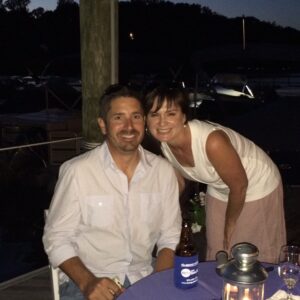 Ray and I welcomed our first daughter in 2007 and our second in 2011. By then, Bridge Marina and the Boating Club were deeply woven into nearly every part of our lives. We were raising two daughters, operating a marina and building an entirely new kind of boating business – all at the same time.
There’s never really been a clear dividing line between work and family for us. In those earlier years, the marina was where Ray spent his days while I stayed home with our daughters, squeezing in marketing and other administrative tasks from home when our young daughters napped for a few hours in the day and after they went to sleep each night. Ray and I would connect late at night once the marina closed, usually talking about business, and we grabbed whatever free family time we could together.
We used to joke that the marina and Boating Club were our first and second child because we were raising them, too. We worried over them. We lost sleep over them. We celebrated every sign of progress. We made mistakes, adjusted and tried again. Some lessons came from success. Many more came from the times when things did not go as planned.
In those early years, we often described Bridge Marina as “a small business with a big-business attitude.” Looking back, the phrase makes me smile. It was a little bold, especially for two young business owners working with limited resources, a tiny marketing budget and a boat club that initially had no boats or members.
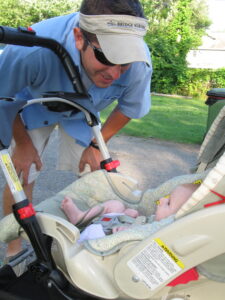 But it also captured something important about us. We may have been small, but we believed our members and guests deserved professional standards and a thoughtful experience. We wanted to operate with the discipline and ambition of a much larger company without losing the personal attention, flexibility and heart of a family business.
That idea still matters to us today. When you’re building a business with your spouse, there isn’t really a moment when you “leave work.” Dinner conversations become planning meetings. Family vacations often become opportunities to visit other marinas. Even today, Ray and I still find ourselves talking about Bridge Marina over morning coffee or while we’re out for a walk, always looking for ways to improve our processes and experiences for our guests, members and team. I suppose that’s what happens when your business grows up alongside your family.
How Boat Clubs Have Changed Over 20 Years
Prospective Members No Longer Need the Basic Concept Explained
For roughly the first decade, we spent a great deal of time answering one question:
“What is a boat club?”
People often looked for the catch. The idea of paying for access rather than ownership felt unfamiliar. Gaining trust was sometimes difficult.
Today, consumers regularly participate in “shared-use” services. Vacation homes, cars, office space, entertainment and countless other experiences can now be reserved without being owned. As a result, many of our current boat club prospects understand the basic boat club model much more quickly. Their frequently asked boat club questions have become more sophisticated:
- How easy is it to reserve a boat? (Actually quite easy!)
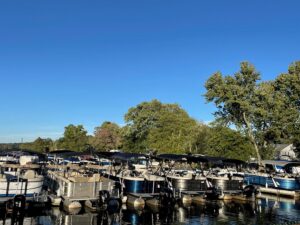
- What types of boats are available? (Over 40 between two locations!)
- Is training included? (Absolutely!)
- How many locations can I use? (Lake Hopatcong and Highlands!)
- What is included in the membership? (Boats, equipment, member events, ongoing education and more!)
- How does one boat club compare with another? (It depends on what matters to you!)
In our view, that is progress. Prospective boat club members are no longer deciding only whether the concept makes sense. They are deciding which boat club is equipped to deliver the experience they expect.
More Boat Clubs Do Not Automatically Mean Better Boat Clubs
Today there are more boat clubs than ever. That’s great in our view. We understand the appeal because we’ve lived it for 20 years, and competition pushes everyone to improve. But I’ve also learned that owning several boats and creating a reservation system does not, by itself, create a strong boat club A boat club must consistently deliver on details that members may never see, things like:
- Fleet planning and availability
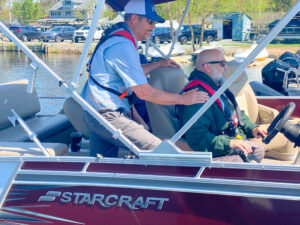
- Preventive maintenance
- Boat preparation and cleaning
- Reservation policies
- Member onboarding
- Practical, on-water training
- Safety standards
- Effective and efficient staffing
- Member feedback
- Long-term reinvestment in the fleet
When everything works well, the boat club member experience feels simple – a member shows up and ships out with little to no friction. But creating that simplicity behind the scenes is anything but simple. We’ve learned to improve our systems and approaches through trial and error, and we continue to learn and adjust every day.
The Way We Market Has Completely Changed
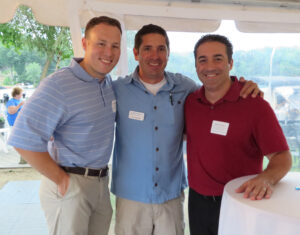 When we started Bridge Marina Boating Club in 2006, simply creating a marina website felt innovative. Postcards and direct-mail campaigns consumed a large portion of our very small marketing budget. They were time-consuming and expensive, but there were few other dependable ways to reach prospective members. Press releases were also enormously important. We could host a picnic for our members, send information to the local newspaper and have a reporter actually attend. The reporter might take photographs, talk to members and publish a story a few days later.
Today, we reach boaters through search engines, email, video, social media, reviews and more. A potential member may watch several of our boating videos, read comparisons, review our website, explore our fleet and study our Google reviews before ever speaking with our team. In our view, that access to information is good for consumers, as it holds operators to a higher standard. It’s no longer enough to make a broad claim about offering a great experience and “the best boat club.” People can research whether a business has demonstrated that experience consistently over time – the proof really is in the pudding.
Consumers and Their Expectations Have Changed
Over two decades, Bridge Marina Boating Club has operated through a housing crash, economic uncertainty, periods of strong growth, a pandemic and major changes in consumer behavior. The way people think about discretionary spending has changed with those conditions. During periods of significant financial uncertainty, we’ve positioned the boat club as a practical and budget-conscious alternative to boat ownership. At the time, the language of luxury could feel disconnected from what many families were experiencing. Today, “luxury” is everywhere. The word appears so frequently that it often communicates very little. Polished images and premium-sounding language have become expected, even when the underlying service doesn’t match the verbiage. For us, the more meaningful measure is not whether an experience can be labeled luxurious. It’s whether it respects the member’s time and expectations:
- Can they arrive to a clean and prepared boat?
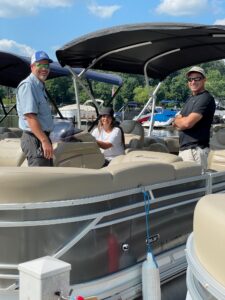
- Can they get help when they need it?
- Can they learn without being made to feel uncomfortable?
- Can they choose from quality boats?
- Can they trust that the business operating the club understands safety and boating?
Those are the types of questions and benchmarks we measure ourselves by.
Our Team Has Always Been at the Heart of the Experience
Our processes have changed significantly since 2006. For one, our reservation systems are far more evolved. We started with a paper calendar on the wall with penciled reservations scribbled on it. Today, our boat club members book everything themselves online. Across the board, we are more sophisticated now – from more structured member and team training to better communication and maintenance systems. 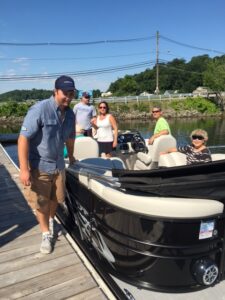
But the quality we value most in our team has remained remarkably consistent. From the beginning, we’ve always looked for people who are kind, helpful, friendly and ready to assist. A member may remember the boat they used, but they are just as likely to remember the dockhand who patiently helped them, the instructor who made them feel more confident or the team member who handled an unexpected challenge with ease. In our view and experience, those interactions define the experience, and it’s consistently where we’ve spent a lot of time and attention.
Looking Back, We Really Were Trailblazers
Bridge Marina did not invent the boat club. We thought for a moment we might have come up with a completely new way to boat, but we learned quickly that operators in Florida and elsewhere had already begun building versions of the model. But in 2006, nothing like Bridge Marina Boating Club existed in our part of New Jersey. There was no established local playbook to follow. Prospective members did not already understand the concept. There were no nearby clubs to study, no mature category to copy and no guarantee that New Jersey boaters would even embrace the idea at all.
Year by year, we had to explain the model, create the processes, learn what members needed and build trust one person at a time. So in that sense, we were trailblazers and we helped introduce a new way to boat in New Jersey. Over the years, we also helped shape what that experience could become: not simply access to a shared fleet, but thoughtful education, professional support, genuine hospitality and a way for people to grow into more capable and confident boaters.
Today, boat clubs are far more common. Consumers have choices, the industry understands the model and new operators continue to enter the market at a record pace. Every once in a while, Ray and I will laugh about how much time we used to spend explaining what a boat club even was. And while we are proud to have been early, being first – or among the first – is not what matters most to us now. What matters is what we have learned from staying with it, continually refining and improving what we do year after year.
We Are Still Guided by the Original Idea
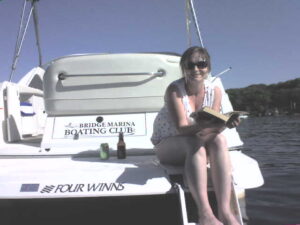 A great deal has changed since Ray and I stood in that booth at the New York Boat Show with no boats, no members and a stack of printed materials. The industry has changed. The way people research has changed. The way people communicate has changed. The number of boat clubs has changed dramatically.
But the original idea still holds: Boating can be easier. People can spend more time confidently enjoying the water and less time managing the work surrounding it. Twenty years later, we are no longer explaining the boat club concept from scratch. Instead, we are helping boaters make informed decisions, enjoy their time on the water and become more confident and capable in their skills.
We are grateful to Jack, the first member who took a chance on us; to every member who followed; to the team members who helped turn an idea into a real operation; and to the many people who challenged us, encouraged us and helped us improve along the way.
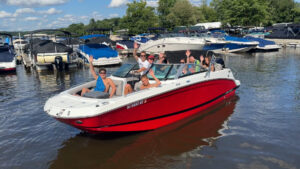 We are also grateful for what this business has given our family. Bridge Marina has been the setting for much of Ray and my life together. It is where Ray and I took one of our first real risks, and it’s where we continue to work through disagreements and celebrate small victories. It’s been an amazing opportunity to truly learn what we are capable of building as a couple.
Twenty years later, we are still learning, still adjusting and still trying to make boating easier and better for the people who trust us with their time on the water. Here’s to twenty more.